🎣 Check out our universal aluminum bases


Bank Fishing Rod Holder Setup
Bank fishing guide
Use this guide to work through access, ground conditions, rod visibility, spacing, and the landing path from shore.
- Start with access, footing, and the landing path.
- Keep rod spacing manageable from shore.
- Route products through the bank-holder setup problem.
Bank fishing rod holder setup starts with the ground, the cast angle, the rod spread, and the landing path. Catfish, carp, buffalo, hybrid stripers, and beginner bank trips all need rods visible, stable, and reachable before product choice.
Videos
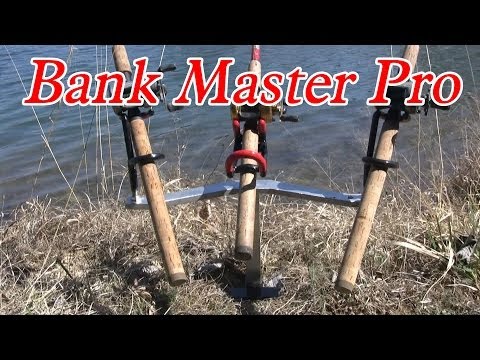
Setup
Start by choosing a bank position where the holder can stay planted, the rod tip can be watched, and a hooked fish can be landed without crossing unsafe ground. Use fewer rods when the access point is tight, crowded, steep, rocky, muddy, or exposed to current.
What makes this setup different
The bank setup article should feel shore-first: mud, riprap, concrete, steep banks, public access, night visibility, and the path to a landed fish all matter before the reader sees a product list.
Read the bank before setting the first rod
A bank fishing rod holder setup is only as good as the ground under it. Grass, mud, sand, riprap, concrete, gravel, and steep public banks all change whether a ground stake, bank holder, or alternate base can stay stable.
Before the first cast, choose where the angler will stand, where the rod can be reached, and how a hooked fish will be led to shore. If the landing path is unsafe or blocked, the holder position needs to move even if the cast angle looks good.
Keep rod spacing visible and reachable
Bank spreads can get crowded fast. A practical setup keeps rod tips visible, lines separated, and each rod close enough that the angler can react without stepping over other rods or loose gear.
For catfish, carp, buffalo, hybrids, and beginner bank trips, the right number of rods is the number that can be watched and cleared. A smaller spread with solid placement often works better than a long row that no one can manage when the bite starts.
Plan for current, crowds, and public access
Current can sweep lines together, crowding can shorten the safe casting lane, and public-access rules can limit where equipment belongs. The article should help readers adjust the spread instead of promising that one bank layout fits every shoreline.
Use bank products after the bank condition is clear, anchors only where they support the technique, and HydroWeb landing nets only where the landing path and target fish make the net useful.
Hard or rocky bank
Setup decisionCheck whether a ground stake, bank holder, or alternate base can stay secure before setting the spread.
Product pathBank products, Bank Master Pro, or a ground base only after the surface is known.
Current or heavy fish
Setup decisionKeep rods high enough to watch bites and spaced so lines do not sweep together.
Product pathBank holders, OG/Talon holder paths, anchors, and HydroWeb landing nets where the landing path supports them.
Beginner or family setup
Setup decisionUse a smaller spread that can be watched and cleared quickly.
Product pathSimple bank-holder paths before multi-rod layouts.
Products to consider after the setup is clear
Use product links as practical next steps, not as generic shopping blocks. The mounting surface, rod angle, legal rod count, landing lane, and fishing method should decide which path belongs in the final article.
Bank setup product links should start with bank products, Bank Master Pro, and Ground Stake Base, then move to OG/Talon holders, anchors, and HydroWeb landing nets only when the ground, current, and landing workflow justify them.
- Bank products
- Bank Master Pro
- Ground Stake Base
- OG 33/45 rod holder
- Talon 5/35 rod holder
- HydroWeb landing nets
Common setup mistakes to avoid
- Setting rods before checking whether the holder can stay planted in the actual ground.
- Spreading rods so far apart that a bite cannot be reached quickly.
- Ignoring the landing path until a heavy fish is already at the bank.
Fish care, rules, and local judgment
Bank-fishing copy should keep fish handling practical: stage pliers, net, camera, and release path before the first bait is set, and remind readers that rod count, bait, harvest, and public-access rules vary by waterbody.
Fishing rules can change by state, waterbody, access point, season, species, rod count, bait, harvest, and protected status. Use these links as starting points, then follow the current statutes, administrative rules, agency notices, and waterbody-specific regulations for the exact place you plan to fish.
- U.S. Fish & Wildlife Service fishing license and state-agency lookup
- U.S. Fish & Wildlife Service general fishing laws for National Wildlife Refuges
- eCFR Title 50: Wildlife and Fisheries
FAQ
What is the best bank fishing rod holder setup for beginners?
Start with one or two secure rod positions close enough to watch and reach. Add more rods only after the bank, local rules, landing path, and crowding make the spread manageable.
Should bank anglers point rods high or low?
The angle should keep the bite visible, hold the rod securely, and match current, line angle, and bank height. The best angle changes between still water, river current, steep banks, and crowded access points.
Where this guide fits in Learn
Use this resource with Learn, Gear Guidance, Fishing Guides, and Tournament Calendars when the reader needs species-specific setup guidance before buying gear.